


















Archlute strings
«SONATE A trè, doi Violini, e Violone, ò Arcileuto, col Basso per l’Organo»
“Trio sonatas for two violins and violone, or archlute, with the bass for the organ”
(Arcangelo Corelli, title page of his Opus 1, Rome 1681)
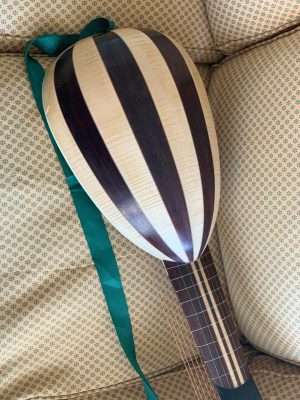
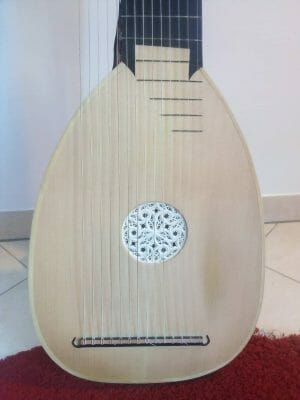
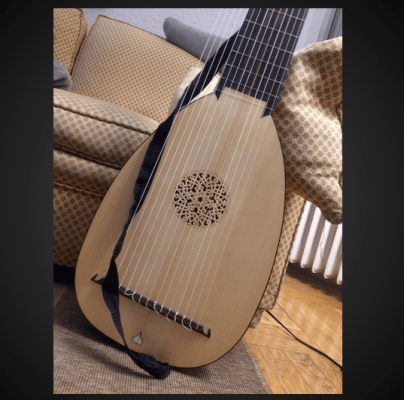
The archlute is a lute with a second, longer neck for its basses: the trebles keep the pitch of a lute, while the open diapasons go much lower and ring for longer. It was the continuo instrument of Corelli and Handel. On this page you will find its history told through the strings, what each register uses today and the lines in our shop that suit each one.
Piccinini and the long basses
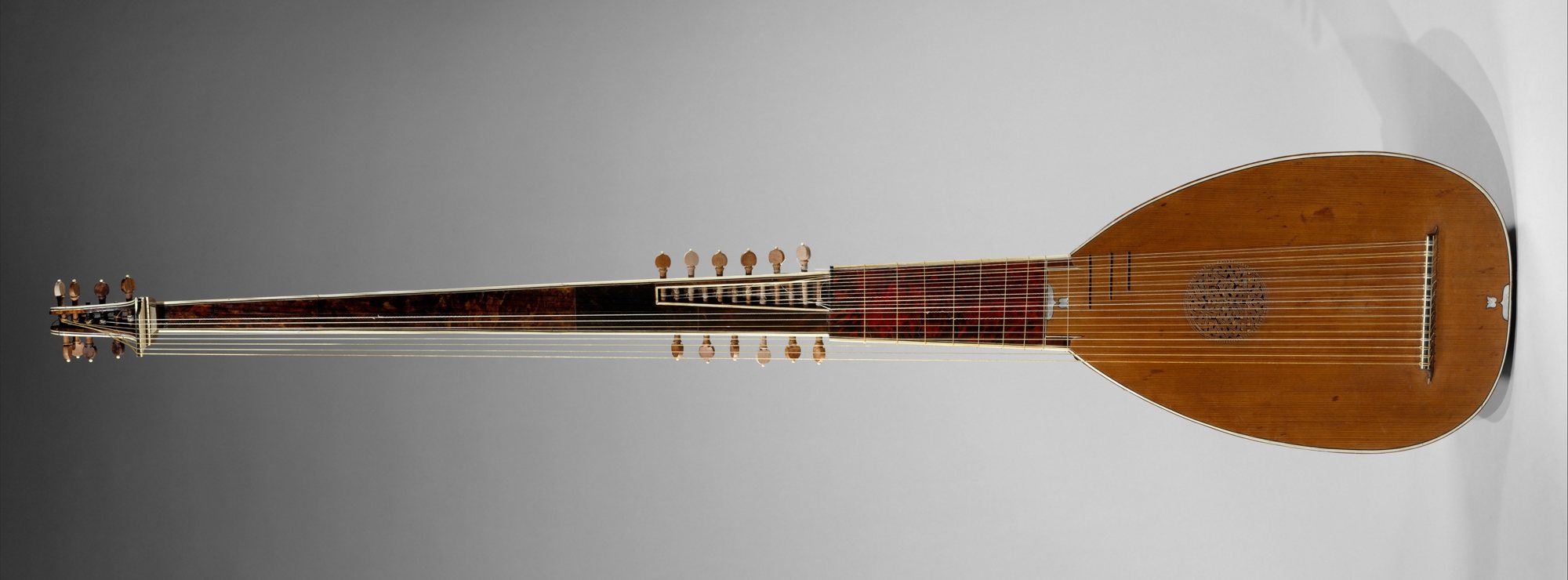
Archlute by David Tecchler, Rome, 1725. The Metropolitan Museum of Art, New York.
In his book of 1623 the Bolognese lutenist Alessandro Piccinini claimed the invention of the arciliuto, and protested against those who called it liuto attiorbato, as if it came from the theorbo. In 1594, he says, while in the service of the Duke of Ferrara, he went to the Padua workshop of the lute maker Christofano Heberle to try out long, unstopped bass strings. The first attempt failed:
«li feci fare per proua vn Liuto di corpo così longo, che seruiua per tratta de i contrabassi, & haueua due scanelli molto lontani, vno da l’altro, & riuscì di poca voce, perche non si poteuano toccare i contrabassi appresso lo scanello; tal che ne feci far’vn’altro con la Tratta al manico, & riuscì buonissimo»
“as a trial I had him make a lute whose body was so long that it served as the extension for the contrabassi, and it had two bridges far apart; it had little voice, because the contrabassi could not be plucked near the bridge. So I had another made with the extension on the neck, and it turned out very well”
(Alessandro Piccinini, Intavolatura di liuto, et di chitarrone, Bologna 1623, chap. XXXIIII)
From the liuto attiorbato to the Roman archlute
Piccinini’s instruments, he says, were heard with great pleasure in Ferrara by the Duke and by the Prince of Venosa, Carlo Gesualdo, who liked “those so sonorous basses”. Two types followed. The Venetian liuto attiorbato of the early 17th century, like those of Matteo Sellas, is a lute with a short second pegbox: about seven double stopped courses and a set of contrabassi, with the 1st and 2nd courses at lute pitch, not lowered an octave as on the theorbo.
The Roman archlute of the late 17th and 18th centuries has a shorter fingerboard and a very long extension. An archlute by Martinus Harz (Rome, 1665), now in Edinburgh, has six double stopped courses of 67 cm and eight single diapasons of 143.7 cm, according to the measurements published by Robert Spencer.
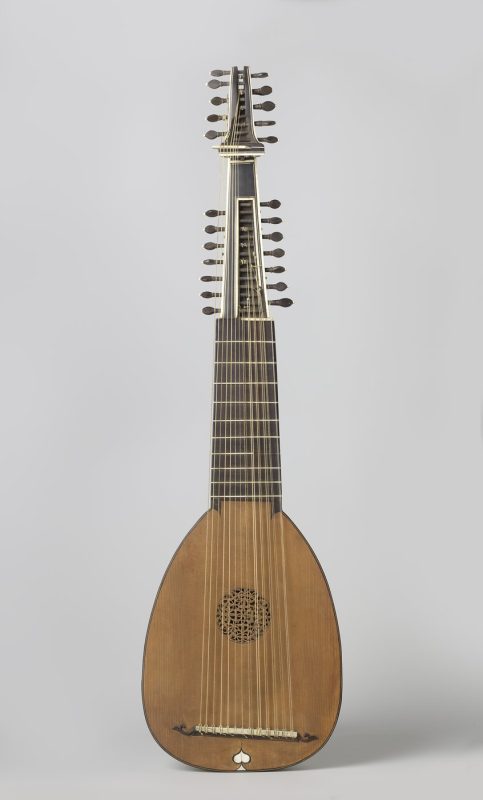
Matteo Sellas, liuto attiorbato, Venice, 1637. Rijksmuseum, Amsterdam (on loan from the Kunstmuseum Den Haag).
The archlute in the basso continuo
From the 1680s the archlute gradually replaced the theorbo in Italian ensembles. Corelli named it on the title pages of his trio sonatas, Opus 1 (Rome, 1681) and Opus 3 (1689), as an alternative to the violone, and Handel wrote an archlute solo in La Resurrezione (Rome, 1708). Its advantage was in the strings: because the upper courses stay at lute pitch, the bass line can rise and still leave a string above it for the harmony.
“It carried on the tuning of the liuto attiorbato with the upper strings at lute pitch, thus enabling the bass to rise higher and still have at least one string left for a harmony note above it.”
(Robert Spencer, “Chitarrone, theorbo and archlute”, Early Music 4/4, 1976)
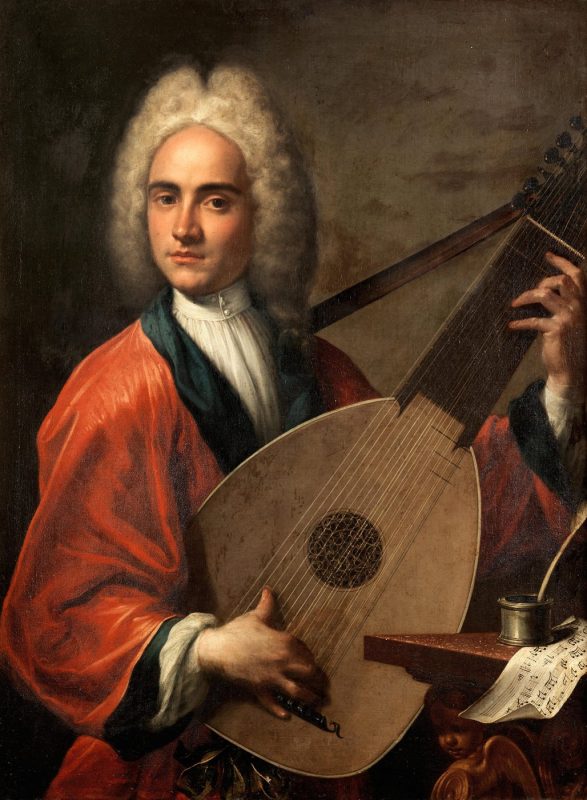
Francesco Trevisani (attributed), Portrait of an arch-lutenist, early 18th century. Private collection; formerly owned by the lutenist Robert Spencer.
Courses and tuning
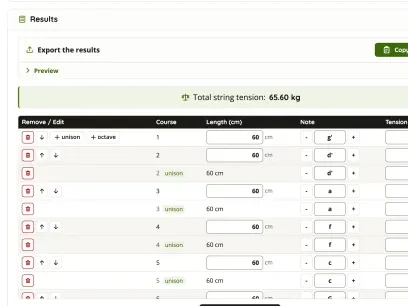
The usual modern archlute has 14 courses in G, with the fingerboard courses tuned like a Renaissance lute and the diapasons tuned to the scale:
g′ – d′ – a – f – c – G – F – E – D – C – B♭′ – A′ – G′ – F′ (from the 1st to the 14th course)
The fingerboard courses are usually double, except the first; the diapasons may be single or double. When they are double, the octave string follows the same rule as on the lute: plain, never wound.
Fingerboard courses
The stopped courses of an archlute are those of a lute with a vibrating length of about 65–70 cm, so they use the same strings: gut or synthetic gut for the trebles and middle courses, and loaded or wound strings for the lower stopped courses.


Diapasons
The diapasons are the reason for the archlute, and length comes first. Aquila’s CDL in 150 cm only reaches extensions of about 100–130 cm of vibrating length; the long diapasons of a Roman archlute, around 140–145 cm, need strings of 160–180 cm. Aquila designed its NGE for the long diapasons of archlute, theorbo and chitarrone, and Kürschner especially recommends its Luxline for them.


Frets
The frets of the archlute are tied gut, usually in gauges that decrease from the nut towards the body. If in doubt, measure the frets you have.


Straps by La Rossignol
The straps made by La Rossignol for early music instruments are entirely handmade, from start to finish by one person, in limited editions. Each design is named after a composer. For a large instrument such as the archlute we recommend the wide 5 cm strap, which spreads the weight better.

Francesco Spinacino

La Rossignol

La Rossignol

Adrian Le Roy

La Rossignol

John Dowland

Gaspar Sanz
What the string makers recommend
No maker publishes a course-by-course table for the archlute. These are the recommendations that apply to it:
| Topic | Recommendation | Maker |
|---|---|---|
| Diapasons | NGE, a partially elastic New Nylgut, was designed specifically for the long diapasons of the archlute, chitarrone and theorbo (180 cm). CDL 150 cm suits medium extensions, about 100–130 cm of vibrating length. | Aquila |
| Diapasons, gut | Luxline, gut with copper or silver wire embedded in it, is especially recommended for the long basses of theorbo, chitarrone and archlute. | Kürschner |
| Trebles | HL oiled gut for the trebles; with New Nylgut, one gauge up from your gut gauge. | Aquila |
| Middle register | Florentiner high-twist gut and catlines for the middle register; Florentiner is not a treble string. | Kürschner |
| Octave strings | Use gut, nylon or New Nylgut for the octaves, never a wound string, and never give the octave less tension than the bass it is paired with. | Aquila |
| Working tension | There is no formula for the right tension: strings should feel neither too tight nor too loose under the right hand. Find the tension you like on one course, trying a semitone higher and lower; then scale the other courses rather than giving them all the same tension, and repeat the test if you change string type. | Aquila |
Choosing gauges
The right gauge depends on the vibrating length of your archlute, the pitch and the tension you prefer. Our string calculator works out tensions and gauges in any material, and the tools page has equivalence and diameter tables across makers. Remember that each maker numbers differently: Aquila by equivalent gut diameter, Savarez NFC by weight per unit length and Pyramid by article number. If in doubt, write to us with your vibrating lengths and the strings you use now.
String calculator and tools Contact usArchlutes for sale in our instrument market


Frequently asked questions
The archlute keeps the trebles at lute pitch, usually in double courses, with a shorter fingerboard; the theorbo has a longer string length and its first two courses are tuned an octave lower. Both have long open diapasons.
Fingerboard strings fit in 90–125 cm. Diapasons need 150 cm (Aquila CDL) on medium extensions and 160–180 cm on long Roman-type extensions. Measure the vibrating length plus what you need to tie the string and wind it on the peg.
Both were used. Single diapasons are simpler to tune and to string; double ones, with an octave, sound fuller. If you use octaves, make them plain strings.
Sources
- Alessandro Piccinini, Intavolatura di liuto, et di chitarrone, libro primo, Bologna, 1623, chap. XXXIIII “Dell’Arciliuto, e dell’Inuentore d’esso”.
- Arcangelo Corelli, Sonate a trè, op. 1, Rome, 1681, and op. 3, Rome, 1689 (title pages).
- Robert Spencer, “Chitarrone, theorbo and archlute”, Early Music 4/4, October 1976.