



















Semi-wound gut strings are first mentioned in an advertisement published in the book “Introduction to the Skill of Music “by John Playford , published in 1664.
 In Cuerdas Pulsadas we have incorporated Gamut’s excellent semi-twisted strings . These strings are made by Gamut Music with a braided copper wire, wound around the gut, and smoothly polished.
The semi-wound gut is intended for the practice of Renaissance and Early Baroque music in a pure gut tone.
The gauges of semi-wound gut strings are measured by the equivalent diameter system. This means that the indicated gauge is equal in weight to the same gut gauge, but the actual diameter of the semi-wound string is smaller, due to the added weight of the metal.
For example, a 1.50mm Gamut semi-wound gut string has an actual diameter of 1.10mm. And it should be used to replace a 1.50mm sheer gut string.
In Cuerdas Pulsadas we have incorporated Gamut’s excellent semi-twisted strings . These strings are made by Gamut Music with a braided copper wire, wound around the gut, and smoothly polished.
The semi-wound gut is intended for the practice of Renaissance and Early Baroque music in a pure gut tone.
The gauges of semi-wound gut strings are measured by the equivalent diameter system. This means that the indicated gauge is equal in weight to the same gut gauge, but the actual diameter of the semi-wound string is smaller, due to the added weight of the metal.
For example, a 1.50mm Gamut semi-wound gut string has an actual diameter of 1.10mm. And it should be used to replace a 1.50mm sheer gut string.

 Anna Rosina von Lisiewska
BERLIN 1716 – 1783 DRESDEN
AN ALLEGORY OF HEARING
Anna Rosina von Lisiewska
BERLIN 1716 – 1783 DRESDEN
AN ALLEGORY OF HEARING
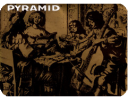
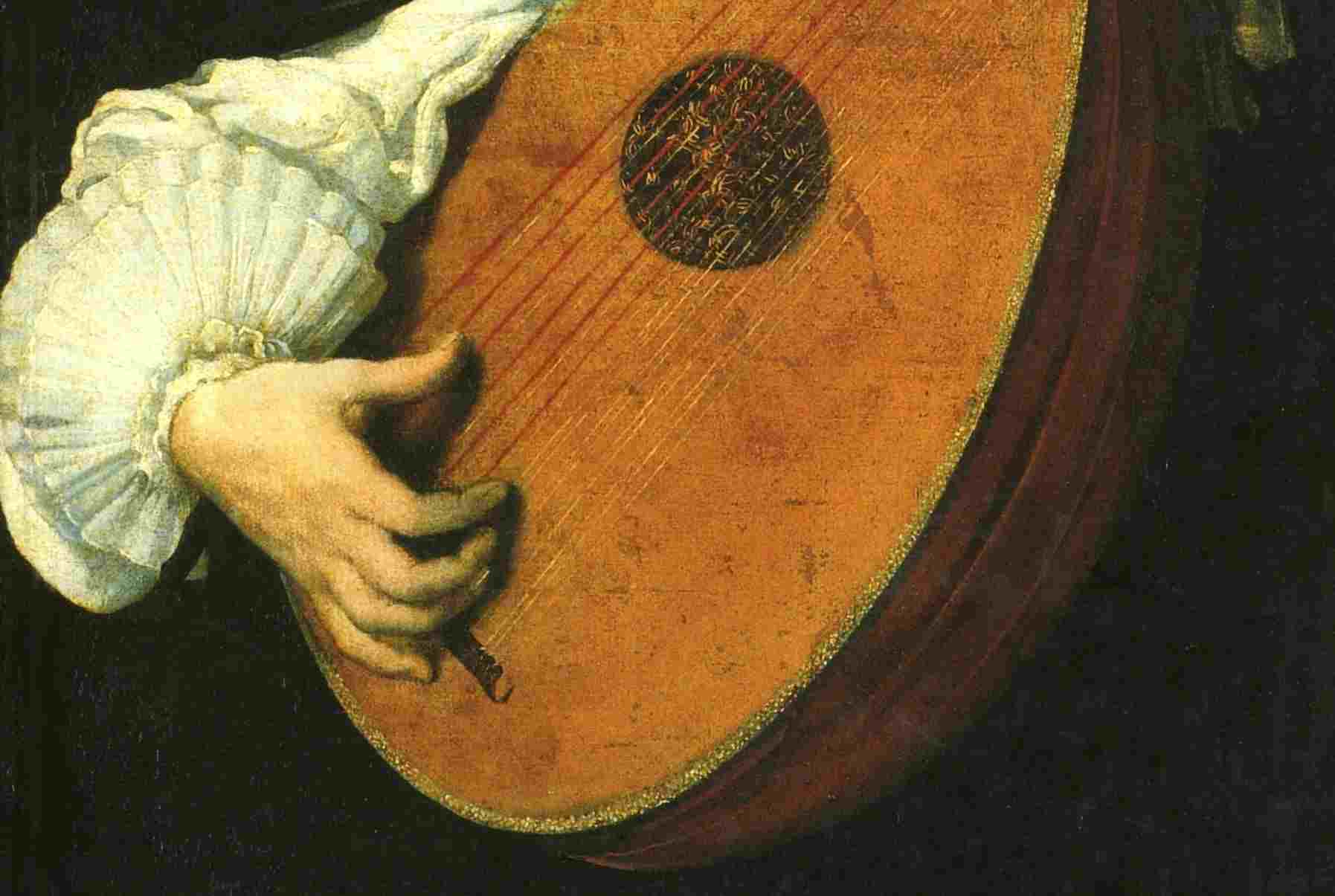 Anonymous dutch painter (1st half of the 17th Century)
Detail of the strings, where you can see reddish strings.
The result is a brighter tone and a faster response than a pure gut string of the same gauge, which is also confirmed in treatises of the time, which describe the sound of the bass strings as having long duration and lush acoustics ( see Mersenne ‘Harmonie Universelle’, Paris 1636; ‘The Mary Burwell Lute Tutor’, 1670 ca.) Later, at the end of the 17th century, the generalization in the use of wound strings (gut wrapped in copper or silver wire) led to the abandonment of these techniques for making strings for the basses. Already today, the widespread use of wound strings places us in an interesting paradox for the historicist musician (should strings that are not really typical of the time be used?) And also a derived acoustic problem (how to solve the imbalance that occurs between the wound treble and bass registers?). 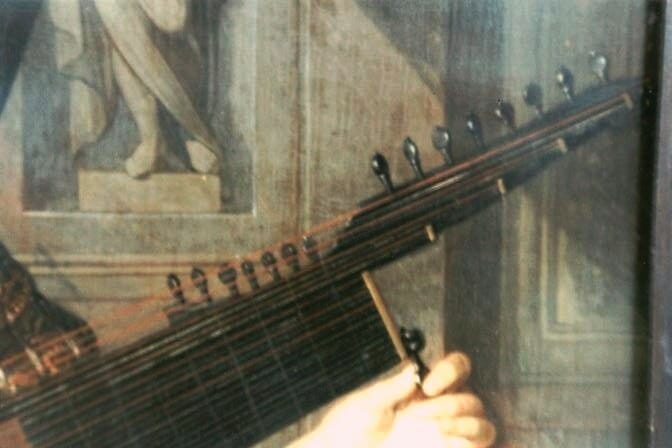 Anonymous dutch painter (2nd half of the 17th C)
Detail of the reddish basses of a 12-courses lute
In Cuerdas Pulsadas we have incorporated Gamut’s excellent semi-twisted strings . These strings are made by Gamut Music with a braided copper wire, wound around the gut, and smoothly polished.
The semi-wound gut is intended for the practice of Renaissance and Early Baroque music in a pure gut tone.
The gauges of semi-wound gut strings are measured by the equivalent diameter system. This means that the indicated gauge is equal in weight to the same gut gauge, but the actual diameter of the semi-wound string is smaller, due to the added weight of the metal.
For example, a 1.50mm Gamut semi-wound gut string has an actual diameter of 1.10mm. And it should be used to replace a 1.50mm sheer gut string.
